 Brainerce Help
Brands
Assign the manufacturer or label to each product, which powers brand filters on the storefront and per-brand reporting in analytics.
A brand is the manufacturer or label on the product: Anker, Apple, Nike, or your own house label. Assigning brands lets customers filter by brand ("show me everything from Anker"), and each brand gets its own landing page in your storefront.
Rules of thumb
- Assign one brand per product. The field accepts several, because it is a multi-select with no cap, but multiple brands on one product muddy your brand filters and brand reports, so pick the one that owns the product.
- If your store sells only your own products, set a single house brand or leave the field blank.
- Brands are flat (no hierarchy). Unlike categories, there is no parent/child relationship: a brand is just a name, slug, logo, and description.
The brands list
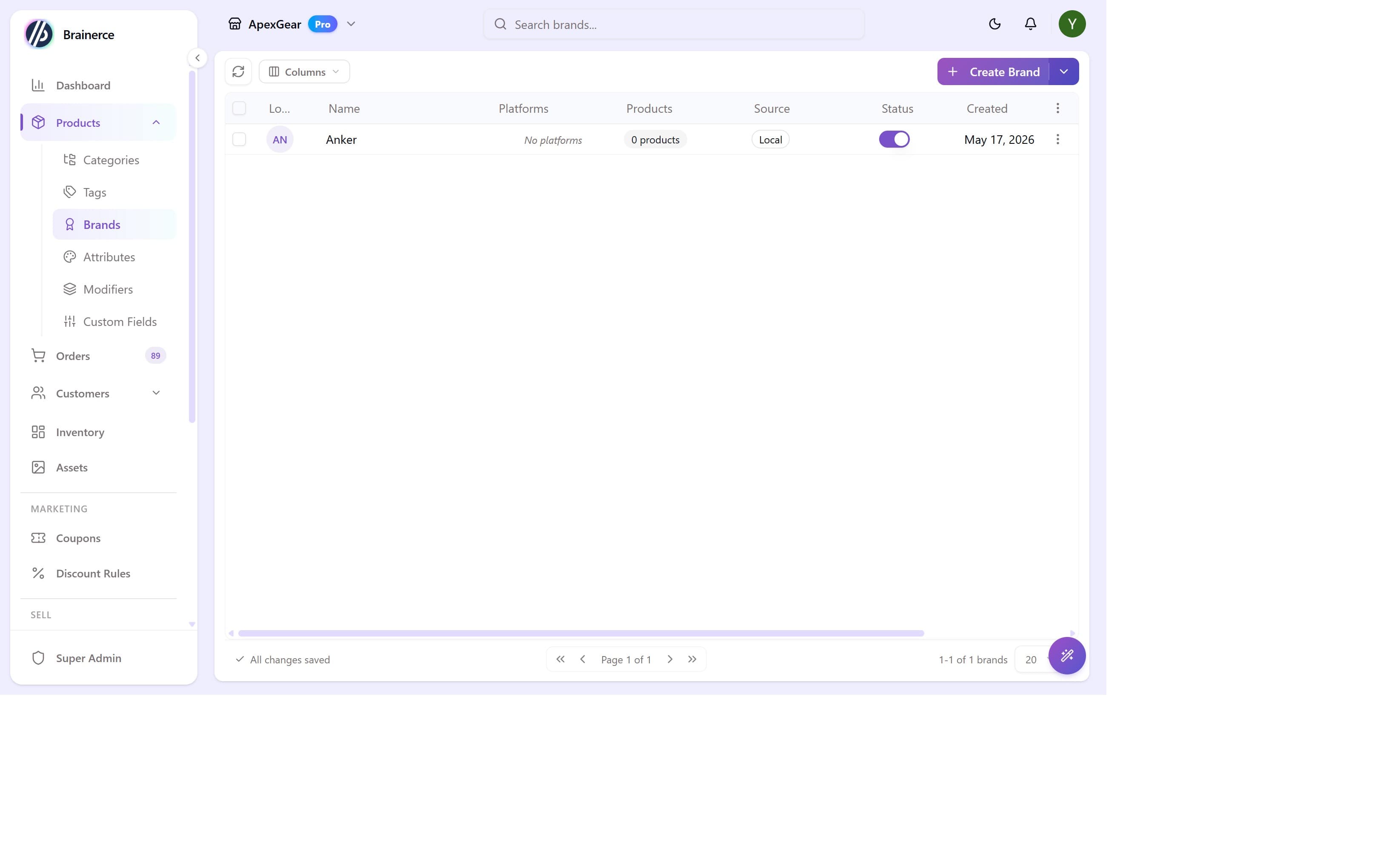
Go to Products → Brands to see all brands with their logo thumbnail, name, which platforms they're published to, how many products use them, and status.
Don't see it in the sidebar? Brands is a module, and it can be switched off for a store; some store types start with it off. Turn it back on under Settings → Modules.
Creating a brand
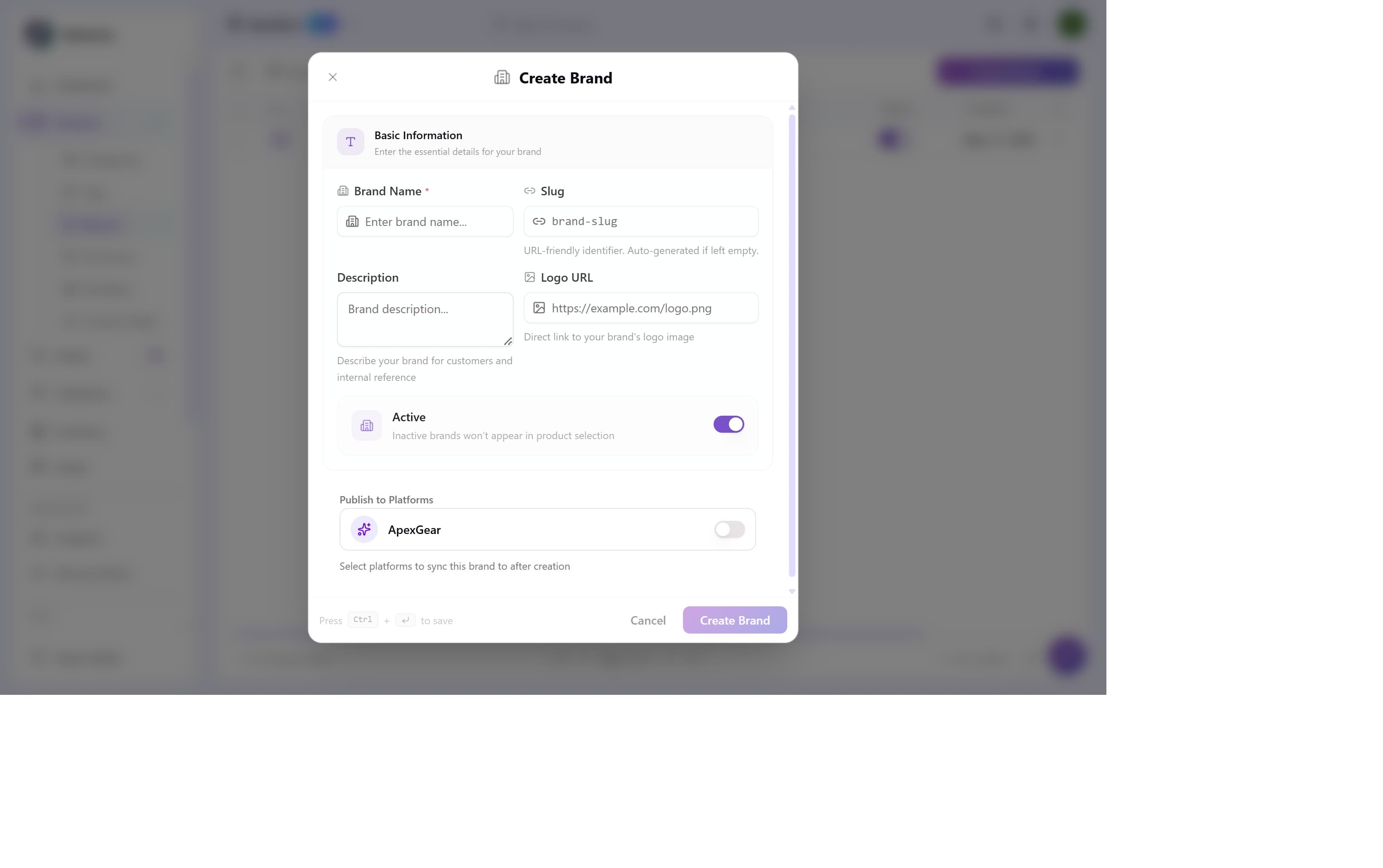
Click Create Brand. The dialog has these fields:
| Field | What it does |
|---|---|
| Brand Name | Required. Shown to customers on product pages and brand filters. |
| Slug | URL-friendly identifier auto-generated from the name (anker → /brands/anker). You can edit it before saving, and it can be changed at any time. Renaming a brand without setting a slug regenerates it from the new name, which changes the brand URL, so set the slug explicitly if you need it to stay put. |
| Description | Optional. Used as the meta description for the brand landing page and shown in the brand header. |
| Logo URL | A direct URL to the brand logo image (not a file upload; host the image on your CDN or any public URL). Displayed in the brand landing page header and in storefront brand filters. |
| Active | Toggle OFF to hide the brand without deleting it. Inactive brands don't appear in the product editor dropdown. |
| Publish to Platforms | Syncs the brand to connected sales channels (Shopify, etc.). Toggle on per channel. |
Click Create Brand and the brand immediately appears in the Brand dropdown when editing any product.
Brand landing pages
Each brand automatically gets a storefront page at /brands/<slug> that lists all products assigned to it, using the logo and description you provided. No additional configuration needed.
What's next?
- Categories & tags show how to organize your catalog hierarchy.
- Attributes cover Size, Color, Material and other variant-generating properties.
- Add a product to assign a brand during product creation in the Organization panel.
SEO Autopilot
NOT YET AVAILABLE. Find and fix SEO problems across your catalog instead of auditing products one at a time. Documented ahead of release; today, per-product SEO scores in the products table are what you have.
Kits (sell several products as one)
Create a kit that sells several of your products together as a single item, with a price and a sale price you set like any other product, and stock always worked out from the contents.